

Custom Buna-N (Nitrile) Gaskets Cut to Size — Instant Quote
Custom Buna-N (Nitrile) Gaskets Cut to Size — Instant Quote
Buna-N (nitrile, NBR) is the standard rubber for oil, fuel and hydraulic service. Fastest Gaskets CNC cuts (laser, waterjet, and more) custom Buna-N gaskets to ±0.015″, up to 32.5″ × 32.5″ in every Buna-N thickness. Instant quote, no minimum, ships in one business day. Large orders may take longer.
Custom Buna-N Gasket Specifications
| Temperature range | −40°F to 250°F |
| Durometer (hardness) | 60–70 Shore A standard |
| Excellent resistance to | Petroleum oils, fuels, hydraulic fluids, and greases |
| Poor resistance to | Ozone, UV, weathering, and sunlight (not for outdoor use) |
| Thicknesses available | 1/16", 1/8", 3/16", 1/4" |
Additional specifications and specific durometers are available on request — contact us with your requirements.
Buna-N vs Neoprene vs EPDM vs Viton
- Buna-N — excellent for oil, fuel and hydraulic fluid; poor ozone and UV resistance (not for outdoor use)
- Neoprene — a general-purpose balance of oil and weather resistance
- EPDM — outdoor, UV, ozone and water service; not for oil
- Viton — high-heat and broad chemical resistance; a premium material that costs more
See the materials guide for the full comparison.
Shapes available in Buna-N
- Ring gaskets
- Rectangular gaskets
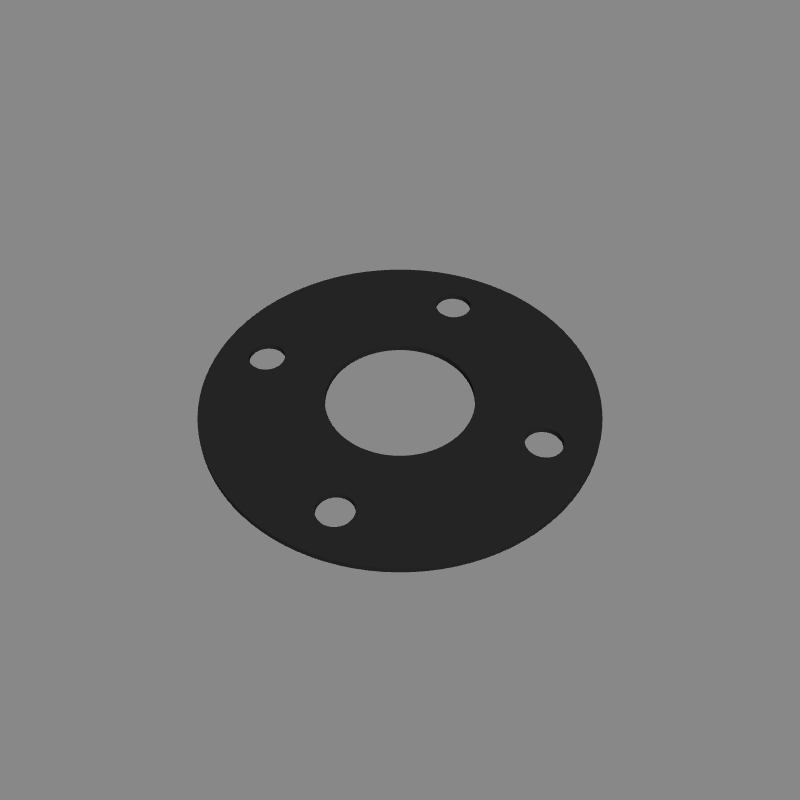
- Flange gaskets with bolt holes
- Disc gaskets
- Square gaskets
- DXF upload for custom outlines
Common Buna-N Gasket Applications
- Fuel-system and carburetor gaskets
- Hydraulic and pneumatic seals
- Automotive engine and oil-pan gaskets
- Pump and compressor seals
- Oil and grease reservoir covers
- Industrial machinery gaskets
When to Choose Buna-N
Choose Buna-N whenever the gasket will contact oil, fuel, or hydraulic fluid — it outperforms every other standard material there. Do not use it outdoors or in sunlight, where its poor ozone resistance causes cracking; choose EPDM or Neoprene for weather exposure instead.
Buna-N Gasket FAQs
What is Buna-N gasket material?
Buna-N — also called Nitrile or NBR — is a synthetic rubber prized for excellent resistance to petroleum oils, fuels, and hydraulic fluids. It is the standard for automotive and fluid-system gaskets.
Can Buna-N be used outdoors?
No. Buna-N has poor resistance to ozone, UV, and weathering and will crack in prolonged sunlight. For outdoor sealing, choose EPDM or Neoprene.
Is Buna-N good for fuel?
Yes — Buna-N is one of the best materials for gasoline, diesel, and oil contact, which is why it is used throughout fuel and hydraulic systems.
Buna-N vs neoprene: which should I choose?
Choose Buna-N for direct oil, fuel or hydraulic-fluid contact; choose neoprene for a general-purpose balance of oil and weather resistance.
What temperature range does Buna-N handle?
−40°F to 250°F.
How accurate are your Buna-N gaskets and how big can they be?
CNC cut (laser, waterjet, and more) to ±0.015″. Up to 32.5″ × 32.5″ in every Buna-N thickness, including adhesive-backed and compressible Buna-N.
How fast do they ship?
Ships in one business day. Large orders may take longer.
Enter your dimensions in the quote tool above for an instant price on custom Buna-N gaskets from Fastest Gaskets — no minimum order, ships in one business day.
Related
Need help before you order?
Which material should I pick?
Full comparison on our Materials Guide.
- Hot parts with oil or fuel (engines, exhaust) → Viton (FKM)
- Hot parts, no oil (ovens, HVAC) → Silicone
- Oil or fuel (pumps, hydraulics, petroleum) → Buna-N (Nitrile) — or Viton for higher heat
- Water / outdoor / sun → EPDM
- General automotive or light oil → Neoprene
- Chemicals / aggressive fluids → PTFE (Teflon) — or Viton for high heat plus chemicals
- Soft seal / uneven surfaces / low pressure → Cork blends
Not sure which material fits? Email us at fastestgaskets@gmail.com.
We CNC cut (laser, waterjet, and more) to ±0.015″. Up to 32.5″ × 32.5″ for most materials; the quote tool shows the exact limit for the one you pick. Ships in one business day. Large orders may take longer.
How to measure
- Measure the outside size — diameter for rounds, or length × width for rectangles and squares.
- Measure the inside opening and any holes (ID, bolt holes, bolt circle if it is a flange).
- Note the thickness you need — pick it in the quoter.
- Enter sizes in inches.
- Already have a drawing? Upload a DXF for an instant price.
More detail: Measuring Guide. Materials: Materials Guide.